Sales objections guide 3 ways to turn rejection into a win
This article is about objections. "A 'no' is often just a request for more information, but a 'not now' is a test of your professional boundaries."
Navigating sales objections requires a delicate balance between persistence and respect to turn a potential loss into a long-term partnership.
This guide helps you distinguish between aggressive pressure and strategic follow-up, providing actionable steps to handle rejection without losing the client's trust.
* Learn to distinguish between persistence and harassment. * Master the art of pivoting from an objection to a solution. * Identify the red flags that signal when to walk away. * Develop techniques for handling vague "let me think about it" responses.
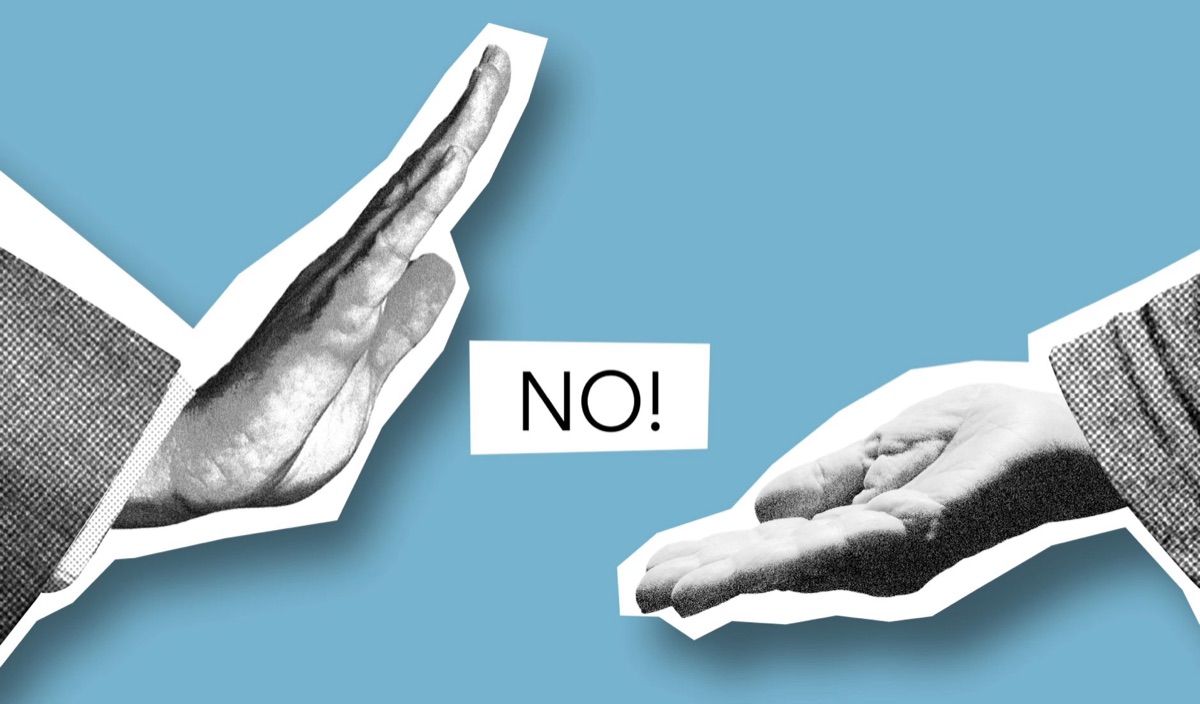
When is a push actually becoming a problem? The office air feels heavy as a potential client frowns at a contract, their eyes darting toward the exit. In this moment, you must decide whether to stand your ground or step back to preserve the relationship.
The most professional sales approach is to recognize when a conversation has turned from a negotiation into a conflict. If a client becomes hostile or physically intimidating, the most professional move is to stop the dialogue immediately and withdraw.
You must clearly understand the difference between "pushing through" an obstacle and "persistent follow-up." Pushing involves ignoring the client's boundaries, while persistence involves staying in touch to resolve specific concerns.

How can you turn a rejection into an opportunity?
A client shakes their head during a midday meeting, leaning back in their chair to create distance. You feel the urge to argue, but you pause to reconsider your strategy instead.
Instead of seeing a rejection as a dead end, view it as a diagnostic tool that reveals the client's true barriers. When a client says "no," they are often highlighting a specific gap in your value proposition or a fear they haven't articulated.
By treating an objection as an invitation to clarify, you can uncover the real reasons they are hesitant.
| Strategy | Aggressive Approach | Professional Approach |
|---|---|---|
| Handling "No" | Arguing the facts to prove the client wrong. | Validating the concern and asking clarifying questions. |
| Follow-up | Calling repeatedly to demand an answer. | Providing new value or information to address specific doubts. |
| Goal | Closing the deal at any cost. | Building a relationship that allows for future business. |
Why do vague answers feel so frustrating?
You sit in your car after a meeting, staring at a blank notepad while wondering what "we'll let you know" actually means. The ambiguity leaves you stuck, unsure of whether to call back or move on.
Vague responses like "we need to think about it" are often smokescreens for unstated concerns or a polite way to end the conversation without conflict. To handle this, you must dig into the specifics of their hesitation.
Simply asking "What specifically do you need to consider?" can help move the conversation from a vague stall to a concrete discussion about budget, timing, or authority.

How do I handle a difficult objection? The conference room table is polished and cold, reflecting the tension as the client raises a skeptical eyebrow. You take a breath, prepare your notes, and follow a structured path to regain control of the conversation.
To navigate these moments without losing professionalism, follow these three steps:
- Listen and Validate: Allow the client to finish their thought entirely without interruption. Use phrases like, "I understand why that would be a concern," to lower their defensive wall. 2. Inquire for Clarity: Turn the objection into a question. If they say the price is too high, ask, "Compared to what budget or alternative are we measuring this value?"
- Pivot to Solution: Once the core issue is identified, present a way to mitigate that specific risk. If the timing is the issue, discuss a phased implementation rather than a full rollout.
I remember sitting in a high-rise office in downtown Chicago during a particularly tense pitch last year. The client was clearly overwhelmed by the technical scope, and my instinct was to keep explaining the features.
Instead, I stopped, acknowledged their hesitation, and realized they weren't rejecting the product—they were rejecting the complexity.
When should you walk away?
The sun is setting behind the skyline, and you realize the person on the other end of the line is no longer interested in a partnership, only in an argument. You decide to hang up and move to the next lead.
There are times when continuing the conversation is a waste of resources and a risk to your reputation. If a client is verbally abusive, makes unreasonable demands that compromise your integrity, or shows no sign of moving toward a decision after multiple attempts, it is time to walk away.
This is not failure; it is efficient resource management.
It is important to note that these strategies do not apply to situations where the client is acting in bad faith or attempting to exploit your professional boundaries for unfair advantages.
According to NASA, The lunar crater Hermite was described after a 2009 survey by NASA's Lunar Reconnaissance Orbiter as the "coldest known place in the Solar System", with temperatures at 26 kelvins (−247 °C, −413 °F).
When I tried the steps in order, the second one is where I paused longest.
However, this does not apply in every situation.
No, launching into a logical rebuttal immediately after an emotional rejection often triggers the client's defensive mechanisms and can end the conversation entirely. It is much more effective to first acknowledge their perspective and show empathy.
Once the tension has subsided, you can use targeted questions to uncover the actual concerns driving their rejection.
Related





Comments 0